Sunday, 20 December 2015

Festive Recommendations

A lot has happened since I posted  blog on here - the year has somewhat run away with me! Over the Summer we decided to move on from The Wingerworth and I'm now pursuing the dream of working in the wine industry with a brilliant Derbyshire-based Wine Merchant called Springwell Wines. I'm sure that an honest and eye-opening review of our time at The Wingerworth will follow in months to come, but for now I'm concentrating on moving forward in my latest adventure. 

I recently submitted the following recommendations for the Vivino Festive Buying Guide and two of the write-ups were published in the guide, only severely edited down. After a long time out from blogging I thought that publishing the full piece on here would be a good way to get back into the swing.

The wines that I have chosen are some of my favourite wines from 2015 - wines that I love and am excited to share with my family on Christmas Day. 


Nyetimber Classic Cuvee, Sussex, UK
Pinot Noir (51%), Chardonnay (36%), Pinot Meunier (13%)

I've approached these recommendations by thinking of what I will be serving to my loved ones on Christmas Day. There were a number of strong contenders here - Gusbourne Estate have won several IWSC Gold Medals this year and was named the IWSC English Wine Producer of the Year. We sell several of their wines at Springwell and I'm particularly fond of the Brut Reserve. The Wiston Estate Rose blew me away earlier in the year too, but in my opinion Nyetimber Classic Cuvee 2010 is the best fizz in the UK right now (read that how you will...). At the astonishing £21.59 I have been paying at Waitrose lately, £-for-£ it is the best value wine you will find full stop. 

You'll note that I have only mentioned English Sparkling Wines - well, that's because I now have a bit of a passion for English Wine and I do genuinely think it is the best! I have to thank good old Simon for introducing me to the stuff at The Wingerworth and I'm so glad he did. Earlier this year a tasting panel including Jancis Robinson, Neal Martin, Kate Spicer and Jamie Goode pitted this and the best of the rest of British wine against Champagne, with English wines taking the top two slots. Chalky soil in Kent and Sussex is similar to that in Champagne so we get a very comparable style to good quality fizz from the other side of the Channel. Just to throw a little controversy into the fire, global warming has done the English Wine industry a bit of a favour over the last few decades and there's no doubt that English fizz is leading the charge in the global market these days. Aside from that, I'm sure we are all careful to "buy local" when it comes to putting together our festive feast, so why not buy your festive wine locally too? 

Enough justification, to the wine itself - alongside that deliciously elegant combination of and freshly baked brioche, waxy lemon, honey and toasted festive nuts, we get a great reminder of the wine's heritage with some crisp apples and pears cutting through the richness. A fine and delicate mousse and in true festive spirit, length that just keeps giving. An absolutely stunning start to our Christmas celebrations.

Waitrose - £31.99  (though I actually bought my current stock at £21.59 with various promotions!)


Au Bon Climat "Hildegard", Santa Maria Valley, California, USA
Pinot Gris (50%), Pinot Blanc (40%), Aligote (10%)

First on my Christmas Day sit-down menu is Chestnut Veloute with Confit Duck Leg - it sounds OTT, but it's basically my favourite soup... The one I wait all year for (I've given the fancy name so you can Google the recipe)! 

Everything in my being tells me to go White Burgundy here, but I'm not "that" guy. Don't get me wrong, I love a good Meursault or Montrachet, but my heart lies in California. This spot was very nearly taken by another stunning English Wine - Litmus Element 20, but I didn't want to seem as though I was being single-minded and I think that the Hildegard will work with the dish better. Whilst I credited the discovery of English Wine to Simon Franklin, the shout-out on this wine goes to my General Manager at The Wingerworth, James Robinson. Au Bon Climat is my favourite Burgundian-style Cali producer and I'd completely bypassed this beauty until James brought into onto our Wine List as part of a special feature on "Our Favourite Wines". You might be thinking that it's an odd pairing, but these three traditionally lighter grapes have been blended and oak aged (two years) to such perfection by the "Mind Behind" Jim Clendenen, that they have just been lifted to another level. Weighty, oily Pinot Gris stands up to the dish, while the minerality of Pinot Blanc and citrus of Aligote cut through the richness superbly. Flavours of crisp apple and mixed nuts blend with the chestnut in the soup perfectly. It's a match made in heaven!

I have been buying this at Majestic, but since the Naked Wines merger their selection seems to have nosedived and I sadly can't pop into my local shop to buy it anymore. Never fear, it's still available online!

Field & Fawcett - £28.50


Seghesio "Home Ranch", Alexander Valley, California, USA
Zinfandel (85%), Petite Syrah (15%)

This year we're having goose so I wanted to go with something a bit weightier and more interesting to stand up to the fattier-and-richer-than-turkey meat. In all honesty, I used to routinely pair Pinot Noir with turkey, but started to find that it gets overpowered by all of the delicious accompaniments on the plate so now I go slightly bolder. I'd recommend Southern Rhone if you're going down the turkey route - perhaps a nice CDP, though you'll get better value from Vacqueyras or Gigondas. 

For my goose I was originally thinking of going with one of the heavyweights from Ridge - Lytton Springs or Geyserville, which incidentally are still available from Majestic via Special Distribution. But then I remembered this big boy and there was no going back! The "Home Ranch"  from Seghesio is just a powerhouse of a Zinfandel that bears stunning ripe, sweet fruit that will go with a festive goose like nothing else. There is beautifully considered oak ageing and earthy undertones reminiscent of a good Rioja. It's Christmas and it's definitely time to pull the big guns out.

Slurp - £49.95


A. R. Valdespino "El Candado" Pedro Ximenez, Jerez, Spain
 
The all-important question of what to drink with your Christmas Pudding. For me it has to be this incredible PX Sherry, steeped in history and general deliciousness. Alfonso Valdespino one of 24 knights who fought to protect the city of Jerez under King Alfonso X and was rewarded with this vineyard by the King in 1264 - plenty of time to perfect the wine! Each bottle of the "El Candado" is locked with a small padlock in memory of one of the Head Winemakers, who used to lock the barrels because the wine was so good. A lovely bit of theatre at the table in allowing one of the guests the honour of unlocking the bottle. 

The grapes are raisined in the sun, fortified to 17% and then aged in Solera for an average of 10 years. The result is an intense, fruity, nutty, caramel-y glass of utter bliss - figs, raisins, dates, treacle, caramel, roasted nuts, cigar box and a touch of dark roast coffee - just everything you would want in, on or alongside your Christmas pud (try all three variations!).

Rannoch Scott - £8.59


Graham's 30 Year Old Tawny, Douro, Portugal
 
Cheese and port is the only way to finish off the festivities. I'm a big fan of Tawny and think that the nuttiness works ever so well with good cheese. But why Graham's over any other? Well, firstly and most importantly it's personal taste, but if it helps Graham's is the only British port house still independently owned by a single family and one of the only houses to still have its own cooperage team. I recently picked up the 30 year old Tawny for a (relative) steal online on the back of a monster 19-point score from Jancis Robinson and it certainly doesn't disappoint! 

The orange rind character typically associated with younger aged Tawny has mellowed out somewhat. Deliciously savory walnut gives balance to sweet fig, honey, butterscotch and enough dried festive fruit to keep Christmas going for a good while to come. Decadent, indulgent and the ideal way to finish your Christmas Day.

Wine Direct - £49.95

Saturday, 20 June 2015

Left feeling a little RAW...


The second of my wine excursions to London in May was a real eye-opener. Wanting to broaden my knowledge, I signed up to attending the RAW Artisan Wine Fair and having never tried natural wine before, I naively assumed it would just be like buying an organic courgette - tastes like a normal courgette, just give it a good rinse first!


In the strictest sense of the word, natural wine means that nothing is added to or removed from the wine during the wine making process - no sulphites, finings, filtration, sugars, foreign yeast, staves, chips or pH adjustments. In my mind - no way of maintaining a consistent product. That can be explained away in a retail environment in some flowery way like "each wine has its own character", but the lack of anything to preserve the wine and stop its oxidation means that every bottle is extremely volatile. The RAW Fair, created by natural wine pioneer Isabelle Legeron MW, aims to bring together the best examples of these natural wines from around the world.

The biggest issue that I immediately noticed was where RAW chose to bring these wines together. Yes, the Old Truman Brewery on Brick Lane is hip and edgy just like the wine on display, but the venue had no air conditioning - a disaster waiting to happen with such fragile wine. Walking into the brewery I joked "it's like a greenhouse in here, that can't be good for the wine?...". Secondly, and I appreciate that it was Brick Lane - the venue was crawling with smartly-dressed, but extremely imposing and intimidating security. It made the whole atmosphere very uncomfortable. It's a wine tasting... Compared to the EWP tasting the previous week, which I've already blogged about, it was such a contrast. In my opinion, it was just an epic, epic mistake on venue selection by the organisers. It has to be said though, that the atmosphere was absolutely buzzing, with everyone seemingly excited to be involved in such a successful event. So many of the producers were incredibly passionate about their product and extremely eager to chat, in a much more approachable and real way than at a stereotypical wine event.

Many of the producers that I spoke to were seeking wholesale representation in the UK, which I can see being a real struggle for them under the conditions provided. Their product will spoil quickly if stored at too high a temperature and in my opinion they're already fighting a losing battle with the wine's presentation already questionable, being unfined and unfiltered. I just can't get my head around who would buy these wines in a commercial setting and as such, why these producers would cripple their opportunities in the marketplace by making it. Based on my experience at the RAW Fair, I certainly wouldn't be confident in selling any natural wine at The Wingerworth. I'd say that at least half of the wine that I tried was oxidised to the point of being undrinkable (or certainly unsalable). I'd say that an extremely generous 5% was mildly enjoyable. The rest had an underlying oxidised taste of wet cardboard [thanks to my principal wine supplier, Peter Bamford of Modern French Wine for the tasting note!]. Aside from the "wet cardboard" note, Peter also suggested that "bruised apple" is a good indicator of oxidation. Very interesting - looking back at my notes I saw that particular descriptor had cropped up an alarming amount. In fact, our "wine guy" Simon suggested that for the most part if they had been put next to a decent scrumpy from Devon, he wouldn't have been able to tell the difference.

Indeed, after returning home a lengthy and surprisingly passionate debate on the event and natural wine in general ensued via email between myself, Peter and our Simon. Similarly, a slightly shorter and less intense discussion fired up on Vivino. Generally I think people "get it" - "it" being the idea and reasoning behind natural wine. It's all about going back to the basics of winemaking, using techniques used before science and technology [dare I say it] improved production methods. The process of winemaking has evolved over hundreds of years and I was actually surprised to learn that the wines of the previous century were generally far more heavily sulphited than modern wine. The problem is that although the intention is good, the wine is generally just not good enough.

Dare I quote Peter? I'll quote Peter. I have his permission...

"This sort of wine is insane. It goes off if it ever goes above 15 degrees C. For even the apparently-tasty ones, age them a few months and they'll have gone off too. For restaurant environments (warm storage), they're all the more insane. Therefore you shouldn't worry about getting these sorts of wines from me - I avoid them like the plague! They're a horrible blight on the industry though; particularly afflicting many good growers in my beloved Beaujolais. What a terrible waste!"

Based on my limited experience of natural wine at this event, I honestly can't say that I disagree.

Now just to provide balance, I did mention that there were a handful of enjoyable wines on display. The pick of the crop for me were two Californian producers and Seresin Estate from New Zealand. That said, one English producer that I liked did mention that they hadn't been entirely truthful with regard to the entry requirements for the event - I'd have like to include them in my Top 5, but if they're not legit...

5. Balciolo, Valdonica Toscana Riserva, Tuscany, Italy, 2012
Dr Martin Kerres founded this winery "by accident" when searching for a Tuscan summer home. He fell in love with the small town of Maremma and now aims to produce the best wine in the region. His young Sangiovese wines were planted in 2009 and have a surprising depth of flavour and character. The vineyard's location high on a Tuscan hillside overlooking the Mediterranean benefits from plenty of sun as well as cool sea breezes. Cherry, raspberry, redcurrant and cranberry on the palate, with a peppery, spicy, vanilla finish and chewy tannins. The wine is biological and organic, but does benefit from 28mg/L of sulphites and filtration - possibly explains why I liked it.  Previous vintages have raked in awards and to be honest, the bottle would look pretty sexy on a shelf. That said, I'd have probably scored higher if their representative (I believe Director of Sales) wasn't the most miserable man I've ever come across.

4. Blanc de Noirs, Weingut Georgium, Karnten, Austria, 2012
Everyone should know by now that I like a cheeky BdN and this was the pick of the event for me. I headed over to the Georgium stand after a recommendation from our GM James, who said this wine was worth a taste. Aside from the wine being good, it looks from their website as though the winery would be a great place to spend a weekend! Producing purely from Burgundian varietals, their BdN contains no sulphites and is produced using only traditional methods. The red fruit comes through in the form of tart raspberry and a hint of under-ripe strawberry. High acidity also gives a citrus and gooseberry edge, creating a wine that would be perfect to sip outside under the warm summer sun.


3. Estate Zinfandel, Coturri Winery, Sonoma Mountain, California, USA, 1996
The age of this bottle goes against everything I've discussed earlier in this blog - if truly un-sulphited how do they do it? It was actually very enjoyable! The vineyard was first planted in 1967 and its unique position high on Sonoma Mountain ensures slightly cooler temperatures in the summer and conversely slightly milder winters due to the South-Easterly exposure. Incidentally, we also tried their 1987(!) Estate Zinfandel and 1980(!!!) New Vine Cabernet Sauvignon, both of which would have made my Top 10 had there been one, but for my palate were slightly too old to hit the Top 5. Being used to relatively young Zinfandel, the palate took me by surprise. This Zinfandel was smoky and slightly earthy, with a honeyed raisin nose. The palate had more raisin, along with plum, red cherry, raspberry, and herbs, leading to a slight spice on the finish, with a hint of old leather, more smoke and cured meat. The tannin was medium to high and slightly chewy. All round a very interesting and interesting aged Zinf. It's true that sulphites will have dampened all of these flavours that were bursting through - a great example of how to do natural wine properly.

2. "Rachel" Pinot Noir, Seresin Estate, Marlborough, New Zealand, 2012
The guys at Seresin had four Pinot Noirs on show and the quality was evident throughout, but the "Rachel" blend really stood out for me. Robert Parker has actually given the 2010 vintage 90 points and the wine has stood up well with all of the top critics. Located in the Wairau Valley near Marlborough, we get all of the expected nuances of wines from this corner of New Zealand. Light in body, with high acidity and lots of fruit. Whereas the "Tatou" PN was bigger, deeper and more earthy, I thought that the "Rachel" was more approachable, easy-drinking and fruity - the things I guess most people look for in a New Zealand Pinot. The nose was sweet and fruity, predominantly ripe strawberries with a touch of plum. More strawberry on the palate, along with red cherry, redcurrant and a touch of pepper and lots of spice from the oak. Seresin's range is currently for sale at Wine Direct, but at the price I wouldn't say they are exceptional value for money.

1. Zinfandel, Old World Winery, Russian River Valley, California, USA, 2009
Is it just coincidence that another Californian Zinfandel has made it into this list - is it where my tastes lie, or is it just that the guys over in Western California are leading the way in this style of wine? Either way, I thought this wine was delicious. In fact, it was the only wine of the day that I went back for a second taste. The winemaker, Darek Trowbridge, was such a character and extremely eager to tell us about his wines. His whole selection was great and I need to particularly mention the 2010 Abourious, which at $55 on his own website shows how regarded these wines are. His Zinfandel, however was the star of the show for me. Fresher and fruitier than the 1996 Coturri above, the palate was full of darker blackberry and black cherry flavours, along with sweet tobacco, baking spice and rounded with nice, chewy tannin.


Natural wine really isn't for everyone. It's a gamble, but I suppose everyone loves an occasional gamble and in the instance of the above examples it really paid off. It's interesting, it's different and it's raw, just as the name of the event suggests. It has attracted a whole new audience to the world of wine - a younger audience, and that's not a bad thing. Unfortunately the wine itself is also incredibly fragile, it's temperamental and it's too often, well, bad... I leave the RAW Wine Fair with a much greater knowledge of natural wine and although I'd never turn down a taste or a sample, I feel that it's just too much of a risk to buy, whether for myself or for the pub. Whilst I understand the concept and though process behind natural wine, I just can't get my head around why anyone would actually produce it.

Monday, 15 June 2015

English Pub, English Wine!

So I've not blogged for a good 5 months now, it's about time I got going again!... An exceptionally busy Christmas at The Wingerworth was followed by having our first baby at the end of January, then moving house just 5 weeks later. The past few months can be described using every emotion imaginable, more often than not paired with incomprehensible exhaustion. But it's all good, because there's been plenty of wine along the way!

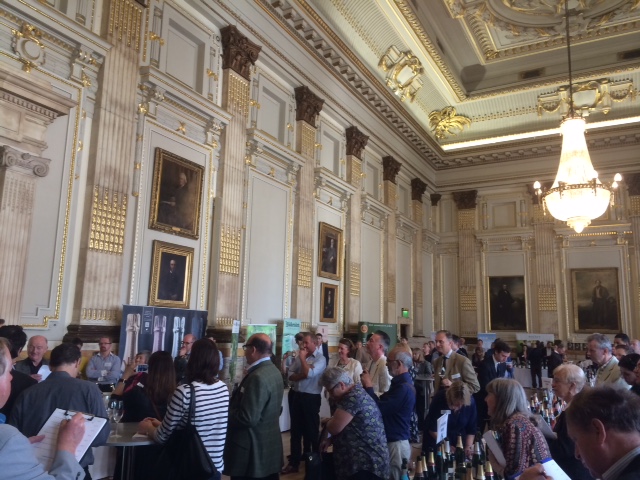
I've got so much to write about but my return to blogging has to begin with something that I've grown incredibly passionate about - English wine. Although I've tried a fair bit of the stuff over the past few years, my eyes were truly opened during my visit to London in May, to attend the English Wine Producers Trade and Press Tasting. Aside from brushing shoulders with some of the industry's big-wigs, I was privileged to try around 120 delicious English wines, some of which were just stunning. Genuine world-beaters! I have, of course, uploaded the majority of my tasting notes to Vivino now, but having been blown away by the quality on show I was disappointed to find that English wine was not a recognised style on the app. Since then I've started a small crusade to raise awareness and even created a petition to be presented to Vivino at some point in the not too distant future. Please do show your support!

There were so many brilliant examples and styles represented at the EWP tasting, it was difficult to choose favourites. But I've done it and here are my Top 10 English Wines of 2015:

10. Denbies Wine Estate, Juniper Hill, NV
Bowland Wines - £12.95
If you like crisp, grassy Sauvignon Blanc this is the wine for you. Nestled in the Surrey countryside, I actually visited the winery when I lived own that way whilst studying at Tante Marie. It's nice to think that I probably walked between the vines that bore this wine, but Juniper Hill makes the list on its own merit, not just nostalgia. In terms of single varietals, Bacchus was the most represented at the event, but aside from Bolney's offering, I found them to be too austere and tart. This blend of 40% Bacchus with 60% Ortega was lovely - in fact, it has just picked up an IWSC silver medal! Some might be surprised to find that the blend results in SB-like qualities, as Bacchus is actually a hybrid of the Germanic grapes Silvaner, Riesling and Muller-Thurgau and Ortega is Muller-Thurgau crossed with Siegerrebe. It's the cooler British climate that brings higher acidity and "green" notes to the wine. Juniper Hill is highly floral, with lots of freshly cut grass, herbs, tart gooseberry and a long, fresh finish. The high acidity is mouth-puckering, but not at all astringent.

9. Bolney Wine Estate, Pinot Gris, 2014
The Wine Society - £16.00
When I think of Pinot Gris I long for rich oiliness, powerful spice, apples and a floral edge. Indeed, the trepidation I had with an English Pinot Gris is that it will lose all of that lovely elegance and opulence that distinguishes it from, well, Italian Pinot Grigio... However, Bolney's position just 14 miles from the South coast in Sussex gives an interesting topographical advantage to their wines. Close enough to benefit from sea breezes, whilst far enough to be slightly sheltered and far South enough to maximise on sunlight and warmth. What results is an almost Alsatian example, full of green apple, pear, waves of mountain flowers and a honeyed sweetness that is beautifully balanced by the high acidity. What I really like about this though, is just how easy-drinking it is. I've got a bottle waiting on the rack for a sunny day.

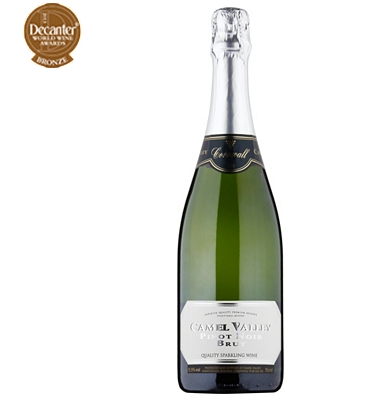
8. Camel Valley, White Pinot Noir Brut, 2011
Waitrose Cellar - £28.99
Camel Valley are one of the "big boys" on the English wine scene and have been producing award-winning wine for decades at their gorgeous Cornwall vineyard. If you're ever in the area, their tours are highly recommended. I have a real soft spot for Blanc de Noirs. Whilst I do love Chardonnay, it's not for every occasion and there's something pleasing about getting a hint of sweet, ripe strawberry in your fizz, which is dampened down in a Classic Cuvee. As a 100% Pinot Noir, this BdN is surprisingly rich on the nose, with luscious strawberries and cream on the palate. If you're choosing a fizz to accompany Wimbledon-viewing, this has to be the one! Elegant, with a fine mousse and a hint of white pepper on the long, long finish. What an absolute delight of a wine!

7. Astley Vineyards, Late Harvest 2014
Hoppocket Wine, £16.19 (37.5cl)
Oh that's right, I've recommended a little-known English dessert wine! There were three on offer at the EWP Tasting and this was just stunning. What I like about Astley is that they're understated - exclusive you might say! With no website or online shop, they rely on reputation, word of mouth and the steady stream of awards that they keep winning year upon year. But that's fine, because their ethos is all about quality - using low yields to consistently make top quality wine. Based just North of Worcester, all production happens at nearby Three Choirs Vineyard. This Late Harvest wine is 100% Siegerrebe (Madeleine Angevine crossed with Gewurztraminer). What results is a generally low-acid wine, though some acid does creep through as a result of the cooler climate in the UK - not that this is a problem, because I think it creates a great balance to the wine. As expected with Gewurz, delicious aromas and flavours of lychee are prominent. In this instance accompanied by honeysuckle, candied lemon peel, ripe pear and a beautiful floral honey finish.

6. Nyetimber, Blanc de Blancs 2007
Berry Bros & Rudd, £39.95
This is the first of two wines from heavyweights Nyetimber to have snuck onto my Top 10 list. Whilst many raise an eyebrow at the price-point their wines command, it is clear when you compare them to the rest of the field that they are doing something truly special in their small corner of West Sussex. We added this wine to our list at The Wingerworth last year and it has been a huge hit with anyone who has tried it. Just to affirm how good it is, the 2007 BdB recently scooped an IWSC gold award. Being a BdB, it is of course 100% Chardonnay and the reason it scores so highly for me is the sophistication with which the grape shines through. The nose is so inviting - a rich buttered toast aroma, with Earl Grey tea and slight hints of yeast. On the palate traditionally British flavours of apples and elderflower join the party, along with nuts and buttered brioche on the long, complex finish. It's just a joy to drink a sparkling wine like this - it honestly makes me wonder why anyone buys Champagne! Speaking of which, just a quick note about their Classic Cuvee blend - although it just missed out on my Top 10 (mostly because I didn't want three Nytimber on there) it's on offer at Waitrose (£23.99) at the moment and out of this world value at that price!

5. Hattingley Valley, King's Cuvee 2011
Slurp, £63.99
If Nyetimber are pushing the price-boundaries for English wine this King's Cuvee is certainly giving them a run for their money. So what makes this Hampshire wine so special? Well firstly it's a limited release, which will undoubtedly raise the price bar slightly. But most importantly, it's just very, very good! Unlike their Classic Cuvee (90% Chardonnay, 5% Pinot Noir, 5% Pinot Meunier), the King Cuvee is a blend of 72 % Chardonnay, with 14% each of Pinot Noir and Pinot Meunier. This gives the wine a bit more freshness and fruit, but that said, Hattingley Valley do seem to heavily-Chardonnay their wines. The good news is, I like that!... The nose is buttery as you'd expect, with apples, pear, hints of ripe stone fruit and fresh dough. I'd like to see a bit more age on it, but given the limited nature of its production, I'm not sure if much will remain in 4 years time for it to compete like-for-like with the Nyetimber. Do I like it? Oh, yes! Would I pay over £60? Errr....

4. Chapel Down, Blanc de Noirs 2009
So I said I had a soft spot for BdN and this is a top example for me. The annoying thing is that eager to purchase, I couldn't find it for sale anywhere online! In fact so rare is this wine at the moment, that I couldn't even find an image of the bottle!... Having chatted with a Vivino friend, I understand that it won't be released by Chapel Down until their 2008 Pinot Reserve (50% Pinot Noir, 50% Pinot Blanc) has all been sold. The Pinot Reserve itself is another great fizz, which might have slipped into the Top 10 and is currently on offer at Majestic for £19.98, so there's really no excuse for us not to stock up an get our Summer drink on!... Back to the BdN - with 97% Pinot Noir and 3% Pinot Meunier, this fizz is a bit of a fruit-bomb. Whilst some producers concentrate their efforts on a very small core range (2-3 wines in some cases), Chapel Down have so many interesting and well-made varietals/blends in their portfolio. Again, I was only chatting to someone yesterday evening about their Flint Dry (46% Chardonnay, 14% Reichensteiner, 12% Schonburger, 7% Huxelrebe, 7% Bacchus, 6% Muller-Thurgau, 5% Pinot Blanc and 3% Ortega) in particular, but just how consistently good their range is - I mean, who's mind works to make a blend like that?!... The BdN is full of delicious red fruit flavours - strawberry, raspberry and red cherry, with a fine mousse that spreads the flavours to every corner of the palate. In addition we get hints of green flavours including ripe lime and crisp green apple, leading to a slightly spiced finish. So what makes it stand out from the Camel Valley above? I think it's just more interesting and complex on the palate (whereas the CV is easier-drinking - both have their merits!...). Either way, I can't wait for this to be released.


3. Wiston Estate, Sparkling Rose 2011
Swig, £35.95
Wiston were one of the surprise packages of the EWP event for me - their wines are consistently brilliant. In fact, their Brut only just missed out on a Top 10 spot for me. I'm not usually a fan of rose wine, but this pink fizz from West Sussex blew me away - it's hands down the best rose I've ever tried. So much care goes into everything at Wiston, it's not surprising that their wines end up as good as they are - just take a look at their website (and label story). It's one of those rare wine moments, where your jaw hits the floor, it all sinks in and then a big grin creeps across your face. You cannot help but smile, I challenge you! And I'm not the only one who feels this way - it's just casually picked up a Gold Decanter Award, as well as  IWC Gold and Sommelier Wine Awards Gold... 57% Pinot Noir bangs in bundles of delicious fruit including sour cherry and raspberry, as well as adding a delicious spice to the finish. 33% Chardonnay adds richness and opulence without being overbearing - buttered brioche on the nose, with citrus folding its way into the complex palate. It's sublime, stunning, sexy, Summery and sophisticated! I've already put my neck on the line with the Nyetimber, but find me a better sparkling rose Champagne than this and I'll eat my hat! Unbelievable...

2. Nyetimber, Demi-Sec NV
Majestic, £25.98
We're getting to the business-end of the list now and this second offering from Nyetimber stopped me in my tracks, just as the Wiston did above. OK so a Demi-Sec is hard to pair with a meal, but you could quite happily drink this at the start of your meal, at the end of your meal with a fruit-based dessert or basically any other time that you wanted... Made from 100% Chardonnay, this wine has all of the brioche, butter, toast and lemon that you'd expect, but this is folded in with almonds, stone fruit and did I detect a hint of pineapple? The high acidity cuts through the richness of the grape and provides perfect balance to the higher sugar content. I've used this word a few times today, but it's stunning. I've also got to say that Majestic are doing us a great service at the moment by giving us 33% off these incredible wines!

1. Litmus Wines, Element 20 2012
Waitrose Cellar, £16.99
So my top wine - a still wine, not a fizz! This wine gets my top vote not only because it's exceptionally good, but because it completely took me by surprise. It's everything that I love in a white wine and I just wasn't expecting that an English producer could defy the British climate in producing a wine like this! It's rich, opulent, creamy, buttery, toasty and biscuit-y - just the things I look for when I'm searching for a good Californian Chardonnay. A carefully considered blend of 48% Chardonnay, 48% Bacchus and 4% Pinot Gris, this is the latest wine to find its way onto our list at The Wingerworth as part of a feature on "Our Favourite Wines". Praise indeed, but praise deserved!... The Chardonnay provides the bulk of the richness, bringing an amazing buttered toast nose and a lovely oily mouthfeel, along with a butterscotch sweetness to the finish. A refreshing mineral edge comes from the Pinot Gris and Bacchus brings bundles of crisp apples and slight acidity for great balance. The wine's name "Element 20", comes from the fact that the soil in which it's grown is rich in calcium, which also comes through on the finish. Oak ageing further enhances the flavour, adding a nutty edge and bringing all the flavours together. This is quite simply the best English wine you will find. Go on, treat yourself...

I feel so strongly about this, we've now got some serious world-beating fizz and white wine on our hands in the UK! I could only pick 10 favourites for this blog, but my original shortlist was 24-long. The EWP Trade Tasting left me with an enormous sense of pride for what British winemaking has achieved and how it is progressing in the wider world of wine. As a British pub, we felt that we were taking a bit of a gamble by adding a couple of English wines to our list over a year ago as a quirky feature, but it's much more serious than that now. Our "feature" has grown to 9 wines (certainly the most extensive offering in the area) and everyone who tries the wine loves them. Come on EWP, just as the cheeky chaps in California left Bordeaux stunned in '76 in the Judgement of Paris, let's sort out a Blind Tasting Competition against Champagne - let's get the cane out of the cupboard and give those boys across the Channel a damn good thrashing...

Tuesday, 16 December 2014

Restaurant Trends (and our plans) for the New Year

We're not even into the new year yet, but already I'm planning what to implement at The Wingerworth in 2015. Part of this process involves looking at forecasts for industry trends and how we can integrate some of those thing into what we do, in order to remain at the forefront of the hospitality industry. In 2014, three of the biggest trends were "hybrid"cuisine, continental-style sharing and "hip" or "quirky" wines. Of course, like all trends they have been going in and out of fashion for decades, but we really noticed a boom in them last year and at The Wingerworth we were excited to be able to implement them in one form or another in order to give our customers a truly modern gastro-pub experience.

Although none of the leading chefs would admit to it, hybrid cuisine is indeed a hybrid of fusion food, which was huge in the 1990s. It is very simply the mixing of cuisines from different parts of the world. Many gastro-pubs opt to restrict themselves to a solely British menu, but I cannot understand the attraction or benefit of doing so with so much wonderful food out there in the world. That said, I would only consider these additions if they enhanced a dish or a menu - adding things for the sake of it is never a good idea. Throughout 2014 we've had some lovely hybrid dishes on our menu, one of my favourites being a ras el hanout rump of pork with polenta, courgette and pineapple. Even some of our pub classics have been garnished with a twist, such as the prawn cocktail with spicy avocado and Bloody Mary in April, the delicious five spice and honey glazed ham and eggs from the start of the year, or even the curry sauce that accompanied the fish, chips, crushed peas and cockles.

But hybrid cuisine was so 2014...

Sharing cuisine was also a big "thing" this year, with tapas in particular becoming really fashionable. That's not to say it won't continue to be so, it just won't be the "new thing" anymore. When we opened The Wingerworth I particularly wanted a sharing element to our pub menu, partly because of the trend and partly in homage to my time at Iberico. We launched with three sharing platters on the menu - a seafood platter, a continental cured meat platter and an English Picnic board, which was by far the most popular. The great thing about sharing is that it's a more casual way of dining - you can pick at things as you chat over a lazy lunch with friends. We've also found that the sharing element works really well during our monthly wine tastings, where guests can have little bits here and there as they go through the guided wine tasting.

As for the quirky wines, well that's where we came into our element! I've spoken about this in greater detail in a previous blog on Wine Lists, so to prevent me from boring you by repeating myself, have a read if you haven't done so already!

So what's "in" in 2015?...

In 2015 we will be seeing three very specific influences on our food in restaurants. The first of these will reflect the change in preference on our palate towards the bitter end of the spectrum. This has largely evolved over recent years as a result of an increased fascination in the moreish, savoury fifth taste - umami. Although the notion of something similar to umami was first suggested in the early 1900s, it was only in 2009 that American scientists found proof of umami taste receptors on our tongues. Since then, media exposure peaked the interest of major food manufacturers, who have increased the balance of umami in certain products, particularly things like soups, sauces and ketchups. It is only fitting that in 2015 restaurants will be adjusting to changes in people's palates with heavily umami-ed or more bitter dishes, containing more of things like dark greens, bitter coffee or bitter chocolate, as well as mushrooms of course.

With this in mind, as well as keeping our food menu in line with the consumer's tastes, it was a great priority for us to find a great coffee supplier. In keeping with other recent trends they had to be relatively local and definitely artisan in their techniques, so in the end we decided to work with the wonderful guys at 200 Degrees. They carefully source the finest coffee beans from around the world before hand roasting them at their headquarters in Nottingham, individually testing each batch before sending over to us at the pub. In roasting the coffee beans to 200 degrees farenheit, they take the roasting process to the "second crack" stage, which is about as bitter as you want to go without impeding the flavour of the coffee - perfect for the modern taste. Similarly our cocktail menu now includes a popular Espresso Martini and we have very recently added a Gin & Tonic Menu, with a selection of premium gins to tantalise the bitter taste-bud. These subtle changes keep us in line with the latest industry trends and in all honesty, our staff are pretty excited about the changes!

We've had quirky wine last year, but second big thing in hospitality in 2015 is quirky food combinations. We humans get bored with eating the same stuff all the time. Equally, with the rise of social media we crave to try something weird that we can tell everyone about - whether it's good or bad, as long as we can be the centre of attention for just a moment. We're not just talking sweet/salty combinations here guys - we're talking full-on bonkers stuff! I don't know if it's the fact that our food sources are quickly depleting, or the influence of "that" horrendous celebrity social-experiment TV show in the Australian jungle, but the word on the street is that we may be seeing insects making their way onto our plates... I don't know if Chesterfield is quite ready for that yet, so perhaps we'll see how it goes down in London before giving it a try at The Wingerworth. Even so, I'm sure you will be seeing something a bit more unusual on our menu at some point during the year! We're already hearing that the Japanese beer-maker Kirin has released a range of salty soft drinks and these interesting flavour combinations will undoubtedly also find their way into our cocktails. If sweet/salty works with food, why not with drinks too?

The final (and in my opinion most interesting) advancement comes in the form of technology. There's just no getting away from it, but the question is which technology to implement and when? The big thing over the last, well, decade now really is the addition of ePOS tills. There's no doubt they make things so much simpler with their back-office reporting systems, but boy are they expensive and the till companies certainly do know how to exploit their market. I recently had a visit from a former employee, who is now a sales person for Apple-endorsed payment company Zapper. Their product allows customers to pay their bill via their mobile phone, with the addition of a financial incentive to the customer for signing up to the scheme. In theory it's a great idea - simple to use, practical and cutting-edge. After much [difficult] deliberation I did decide that we weren't quite ready for it yet. Partly because it's so new to the marketplace, but also because frankly the financials just didn't stack up - for a greatly increased operational cost, the product would not have brought us any additional revenue. Their major downfall is that they treat every transaction like a credit card, charging a [I will say very reasonable!] percentage of the transaction. However, that percentage of transaction will still undoubtedly be much, much higher than the set fee that I currently pay for debit card transactions, which do make up the majority of our PDQ payment split. Make no mistake though - paying through your mobile phone is coming and they will undoubtedly snare some slightly less clued-up operators, but I think they need to make some major base-level changes before it really takes off.

One thing that really does intrigue me is robot pubs. The single biggest overhead in a hospitality business is staff costs and every operator struggles monthly to keep this reigned in. One of the latest "things" in London is iPad-operated pubs such as the Thirsty Bear or the Lazy Fox. Just imagine it - you sit at a table, the beer taps are at your disposal [increased sales?...], you order food and process payment through an iPad. It's quicker, it's easier and it's cheaper. With increasing pressure in the industry to increase salaries, incorporating technology in some way may be a way of making this step more affordable. That said, I do believe that people are a pub's biggest asset and with technology comes less available jobs! But how could we use an iPad in an effective way at The Wingerworth in 2015? My former boss David Perkins recently wrote a brief article in the Nottingham Evening Post on their use of iPads in gathering customer feedback at Perkins and Escabeche. We currently use the archaic method of pen and paper and spend hours inputting and sifting through the data - I'm sure that a similar more technologically advanced system will be finding its way to The Wingerworth next year. We'd never have self-serve beer taps, but who knows - maybe an iPad-based menu with the option to place an order through it rather than waiting for a server is the way forward?

Whatever the New Year brings, I hope it is a happy and prosperous one for everyone involved in the hospitality industry. Happy New Year!

Thursday, 11 December 2014

Ageing Ale

I heard something very refreshing the other day, which got me thinking about ageing real ale - I was desperate to pull a cask of 5.5% winter warmer ale from North Star through the lines at the pub, basically because I was eager to try it [I'm not ashamed to say...]. A member of my staff almost physically stood between me and the cask and sternly told me that it needed more time, because it had only had 24 hours stillaging and 24 hours venting. He was right - higher ABV beers do need longer to settle and to vent, with the process being very similar to the idea of decanting in wine. In my opinion keeping a good real ale cellar is the single most difficult thing that you can do in a pub. It may seem a bit crazy, but each ale does  have it's own personality and temperament; some will be angry and fizz out at you when you tap the barrel, some will be stubborn and require a longer venting time to bring out the flavour. Just like people, they don't like it when it's too hot or too cold, as this will either speed up or stop the natural fermentation process.

The most difficult part of cellarmanship to perfect is the venting process - too much and you're left with flat beer and too little and the ale will be too fizzy, almost like lager. In the case of higher ABV beer, it does requires longer to vent and release the excess carbon dioxide so my diligent staff member was absolutely right to stop me in my tracks. But cellarmanship and the venting process isn't the real concern of this blog - I'd like to talk about really ageing beers. When bottled, brewers will happily put a best before date a year or two into the future on it, but when in cask 3 months is probably the most that you will see. According to the guys at the Brewing Sciences department at the University of Nottingham, there shouldn't really be much difference - both are sealed, airtight containers that have been cleaned and sterilised just before filling. I'm just going to put it out there that the difference is simply that a bottle is disposable, whereas a brewer wants his cask back to refill as soon as possible...

Even after a year or more, beer won't go off as such, it will just taste different. 

Some people make an artform of ignoring the best before dates - they are so in tune with the beers that they sell, they  will tell you when the beer is best. Must be a nightmare for brewers... Around Christmas-time all the "big" beers come out and I know of one particular pub in Nottingham, where the landlord will buy a cask of a particular ale around about now, for Christmas 2015. This Christmas he will be pulling through 2013's purchase. Why? Because just like wine, beer matures and mellows with age; it's highest and lowest notes will be smoothed out. This is particularly the case for bottle-conditioned beers [and casks], because the yeast is added at the very end of the manufacturing process - the longer it has to work with the beer, the more it will impart flavour. Just as with spirits, higher ABV beers will have a "hot" top note from the higher alcohol content, which will mask the other flavours if it isn't left to mellow with time.

So which beers are best to mature? Well in my experience heavily malted beers are best. Although hops are partly added to beer to act as a preservative, the flavour of the hops fades relatively quickly so it is arguably a bit of a waste to mature heavily-hopped ales. Generally it needs to be higher ABV because the alcohol acts as a preservative too, so we're talking strong, dark ales - porters, imperial stouts or even barley wine.

One of my favourite annual traditions is to buy a mixed case of Fuller's Vintage Ale, which then
becomes almost a scientifically detailed 'vertical tasting'. Some we drink almost immediately, but some go into storage for the following Christmas, or even several Christmases to come. Fuller's even recommend to try now, in five years and in ten years. If you don't mind splashing out a bit, there's a 'boxed' case, which looks prettier and gives you a few of the older vintages (back to 2006 this year), but costs £4.16 a bottle. For just £2.91 a bottle, you can buy an 'unboxed' mixed case that usually has two of the latest vintages. But in my opinion Vintage Ale needs to be at least 5-6 years old to be at its best, so you'd have to store these for a good few years yet.

Luckily, we've been amassing this festive treat for a number of years now, so I'll be trying the 2005, 2009, 2011 and 2012 vintages, just to provide a good comparison of how they mature with age. Fuller's do change the recipe slightly each year - using the year's best hops and malt, but the colour, bitterness and ABV of the beer remains the same. Bearing in mind that this is a really great beer to begin with, I've scored each one to the nearest 0.1 stars, rather than my usual 0.5 in order to differentiate between them more easily.

Fuller's Vintage Ale, 2012:

This edition of Vintage Ale is brewed with a combination of Goldings, Sovereign and Target hops. From the Goldings we'd expect citrus (grapefruit or orange), from the Sovereign there will be a more savoury herby element and the Target will again add citrus and spice. Pouring the bottle I immediately noticed how fizzy it was and that the beer didn't hold it's head for particularly long indicating that in the ideal world, it isn't quite ready. There hasn't been enough time for oxidation to complete and for the beer to mellow. The nose is heavy - boozy raisin followed by marmelade and a hint of something like treacle with pepper and spice. On the palate the bitter marmalade hits immediately, before mellowing into a young (perhaps too young), peaty single malt with sultanas and raisins. Then bitter sweetness comes back in with treacle, marzipan and lingering finish of orange pith, raw spices and burnt caramel. Although it has great depth of flavour, the bitter top notes are still just far too strong in the 2012. Make no mistake, this is still a great, great beer, but I know what it will be with another 3-4 years - the caramel will add more sweetness the mouthfeel will be smoother, the bubbles will subside to make it less lager-like and the single malt will really come into its own.
Beer Score: 4.3 Stars

Fuller's Vintage Ale, 2011:
In the 2011 version, the Target hops are substituted with the even more heavily orange/marmalade First Gold hops. Although the beer was still fizzy, it was less so and the head retention was much better. This was partly due to the slightly higher viscosity of the beer as a result of longer maturation and gave the beer a much smoother and more opulent mouthfeel. Sadly, but somewhat interestingly, it had closed up just as wine does in stages of its maturation. It wasn't offering much, even with a good half an hour in the glass to aerate. The nose was particularly stubborn, but did offer a surprising over-ripe red apple aroma, along with something sweet and buttery - perhaps toffee. There was little citrus in the palate too, with the immediate flavours being apple, pear and sour cherry, followed by a sweet, peppery mandarin and peach finish, again with the burnt caramel element. There isn't really too much more to say about this one - let's leave it a year or two and see if it opens up again.
Beer Score: 2.5 Stars

Sunday, 7 December 2014

'Tis the Season (to be gorging on mince pies...)

OK so gorging might be a bit strong, but I must confess I'm partial to a mince pie at this time of year. Best enjoyed with a small glass of tawny port after a hard day! Which gives me an excuse to get myself a glass of one of my favourite (and in my opinion best value) tawny's, strictly in the name of an informative review of course... And a mince pie.

I haven't blogged about port before, so I feel that a brief introduction is necessary. Port is a fortified wine, which is achieved by adding a grape spirit to it during the production process. As well as increasing the alcohol content in comparison to "regular" wine, it makes it more rich and smooth. Port is produced primarily from the indigenous Touriga Nacional, Touriga Francesca and Touriga Barroca grapes, which are grown on the mountainous eastern Douro Valley in Portugal. Just as with any wine, the unique terroir and climate of the area give the wine unique characteristics, which distinguish them from other fortified wines Madeira, Marsala, Sherry or Vermouth. It is then the different ageing and manufacturing processes that determine the characteristics of varying styles of port:

  • A Colheita is just a single vintage port, where instead of the number of years old it is (eg "10 Year"), it is marked with an actual vintage (eg "1997"). However, Colheitas should not be confused with Vintage Ports, which will have been bottled after 18 months of ageing. Colheitas may have been aged in oak for many more years.
  • Vintage Port is made entirely from grapes from a declared vintage year. It is often wrongly suggested that Vintage Port is only produced during exceptional years, but in actual fact it is declared in all but the worst years, or years where economic factors (such as recession or war) would make it difficult to market, export and sell. Vintage Port is only aged for two and a half years in oak, which means it requires another ten to forty years of ageing in the bottle. 
  • Ruby Port is has the shortest and simplest manufacturing time and therefore generally commands a cheaper price. It is aged in concrete or stainless steel tanks to prevent oxidation during the ageing process and to preserve its rich claret red colour.
  • Late Bottle Vintage (LBV) Port was originally aimed to be a Vintage Port, but because of lack of demand it was left back to age for longer than planned. As a result of longer ageing in the barrel, LBV requires a shorter ageing time in the bottle than Vintage Port and is therefore ready to drink as soon as it is released.
  • Tawny Port is made from red grapes and matured in oak barrels for varying degrees of time, allowing a gradual oxidation and evaporation. The oak gradually transforms the wine from red to a "tawny" golden-brown colour and imparts nutty characteristics to the flavour profile.
  • Crusted Port is blended with grapes from several vintages and is not filtered before bottling, so requires decanting before being consumed. These ports are only released when ready to be consumed, so offer a more affordable alternative to those who do not have room to cellar it. One final interesting fact about Crusted Port, is that the date on the bottle is the date when the port was bottled, rather than the date when the grapes were grown.


Taylor's 10 Year Old Tawny:
I always think it's worth spending a few pounds more on a decent tawny, but this one is currently on offer at Sainsbury's for £18. And I'm just going to throw this out there - if you buy it as part of a mixed case of 6, they're only £13.50! We actually like this one so much that we stock it at The Wingerworth. The port itself is a blend of several vintages, which is then aged in oak for around ten years. The nose is full of jammy berries and plums, along with my favourite characteristic - rich, oily walnut. The palate is really smooth and leans more towards the darker fruit, but the walnut sweeps in to steal the show on the sweet, lingering finish. As well as mince pies, I love this port with a strong Stilton - absolute heaven.
Vivino Score: 4.5 stars

So now to the pies...

Mr Kipling's:
The pastry was very pale and didn’t look as though it had enough sugar on top. The mincemeat was very bitter, which overpowered the other fruit, although the raisin did come through slightly. Again, it wasn’t sweet enough to balance the bitterness and the overall flavour was quite bland with a lack of spicing. The citrus bitterness also had a quite synthetic flavour, as though a cheap essence had been used instead of real fruit. The pastry was very dry and crumbly, with not enough butter and bland. Overall, a pretty disappointing pie.
Mince Pie Score: 1.5 stars

Tesco Finest:
There was a brown edge to the lid of the pastry, as though it had been overcooked, but with plenty of sugar on top. The mincemeat was very boozy, perhaps overly boozy, although surprisingly dry considering. The predominant flavour was raisin, followed by good spices – mainly cinnamon. The pastry was slightly dry from being overcooked but was quite rich and buttery and there was a nice sweetness from the sugar topping.
Mince Pie Score: 3 stars

Sainsbury's Taste the Difference:
The pie was a nice golden colour and evenly cooked at first glance. The sweet, moist mincemeat was a real treat, with just the right amount of alcohol in the raisins and a lovely orange peel undertone. There was also a lovely amount of balanced spice, which hit you at the end leaving you with a warm festive taste. The pastry was good – rich, buttery and crumbly, but unfortunately was just a tiny bit undercooked on the bottom. The only other minor criticism is that it was perhaps too sweet throughout because of the restrained alcohol and bitterness.
Mince Pie Score: 4 stars

I still have many more pies to make a start on, but I will add reviews to this blog as I try them.

Wednesday, 3 December 2014

California Dreamin'


Inspired by Simon's recent blog on Zinfandel a few weeks back, I thought it was about time for me to blog about Californian wine. It has been suggested that I might be a fan of Californian wine on the odd occasion and it must be known that I wasn't at all until about a year and three months ago. Sadly, because of the import costs, taxes and therefore retail prices of Californian wines, we aren't readily exposed to quality producers in the UK, so I had drawn my own assumptions that all Californian wine must be as disappointing as the dross I had previously found in my local supermarket. This blog is my discovery of Californian wine.

I have to pause for a moment to say it was absolutely the trip of a lifetime - From seeing Cirque du Soleil and Penn & Teller in Vegas, to swimming with dolphins in San Diego, to taking in the sights, sounds and attractions of LA, followed by the Santas (Monica, Barbara and Maria), Malibu and staying with Rachael's great aunt Sue and uncle George in the Pacific Palisades. Then a complete contrast - the serenity and beauty of the landscape and wildlife driving up the stretch from San Luis Obispo, through Morro Bay, Cambria and Big Sur to Carmel. Finally, there was a half-week of gorging on Michelin-starred delights and watching the Americas Cup in San Francisco. It was just incredible. But the best and most surprising part was honestly the wine. We drank many wines, some not so great. But some really stick nostalgically to my mind.

I could kick myself now - beginning the trip in LA, we spent the first week between there and Vegas and I must confess I passed up many opportunities to try local Chardonnay, Zinfandel and Pinot Noir. I knew better than these "bloody Americans", whose wine lists were filled with nothing but American wine. So narrow minded of them... [So narrow minded of me!...] It was only when Rachael's Aunt Sue said "no, really, you need to try this" at their local Italian restaurant, Casa Nostra, that I succumbed to a taste. It was a half-bottle of Chardonnay from "some local vineyard". I had no idea which producer at the time, but it just so happened to be Au Bon Climat. I was sat in David Beckham and Kobe Bryant's local Italian in the Palisades, sipping Au Bon Climat with Senator Stackhouse. Jesus, if only I knew then what I know now...

Au Bon Climat Santa Barbara Chardonnay, 2011:
I've previously mentioned Jim Clendenen's wines when I reviewed the Wild Boy Chardonnay, so I won't regale the same information. What I will mention is the high quality that he consistently achieves in his Burgundian-style wines, achieved by carefully selecting the appropriate terroir, by ageing in French oak and fermenting in small open-top vessels, just as in Burgundy. As a result, we see characteristics in this wine that are unusual for Californian Chardonnay - it is crisp, clean and refreshing rather than overly opulent. I'm not certain, but I think that Sue probably singled this wine out as the one to try because of these characteristics. Contrary to the Chardonnays I had previously tried, on the nose and palate it was more like ripe orange than sharp lemon and the oak made it more nutty than anything. The finish was long, with a more crisp citrus flavour hitting the back of the palate, along with really buttery toast (Lurpak, not the cheap stuff...). I don't know if the surroundings contributed to the experience, but I would never look at Californian Chardonnay in the same way again - I was besotted.
Vivino Score: 4.5 stars

Unsurprisingly I decided that I'd be drinking Californian wines from then on. Equally, as soon as we hit the coastline I was on a mission to find the best seafood I could. But whilst in San Diego we were staying near the famous Gaslamp Quarter and found a great steakhouse just up the road from Petco Park called Donovan's. With my New York Strip Steak I needed to go red, so opted for a half bottle of Carneros Pinot Noir. In the meantime, we were entertained by the crowds leaving the ball-park after the game, along with the local "nutter" who was dancing in the street and climbing lampposts in celebration of their victory.

Saintsbury Pinot Noir, 2011:
I remember thinking that this wine was much bigger than the Pinot Noirs that I was accustomed to. Not in the fruit, which was the same lovely, juicy red cherry and raspberry combination that I particularly like, but in the length and ripeness of the finish along the accompanying pepper, spice, vanilla and dark chocolate flavours that layered their way into each sip. Tannins were also slightly higher than expected for a Pinot. The feel of the wine was quite "velvety" and sophisticated. It wasn't at all what I anticipated when I ordered but it was a great accompaniment to the succulent steak. Rachael's quip of "is it Taste the Difference?" left me chuckling but no, it was better than that. Had we not just completed a grueling six and a half hour drive from Vegas, I would have loved to finish the other half of the bottle.
Vivino Score: 4.0 stars

Then began our 600 mile journey following the Pacific Coast Highway up to San Francisco - something that everyone must do in their lifetime! Although we took it steady over about a week, I never felt satisfied that we had spent enough time in any place. It was just brilliant. Although not specifically wine-related, I must mention two places that we visited along our route very briefly. San Luis Obispo is renowned for being the most picturesque town in California and the happiest town in America - I really can't agree more. With an beautiful town centre and a breathtaking mountainous backdrop, I can't see why anyone wouldn't be happy there. I have come across many wines from the area since, but sadly we were only driving through in the space of a day. The second place is Morro Bay - a small, sleepy surfer-town. There isn't anything particularly spectacular there, it's just a brilliant atmosphere. We stopped at an amazing beach-front "shack" for lunch and were treated to the most incredible calamari sandwich, caught that morning. Sadly their beverage list came exclusively in cans but the food was definitely both the simplest and the best of our whole trip.

The next major stop was San Simeon, where we stayed at a lovely family-run hotel near Hearst Castle and of course, the Paso Robles wine region. Aside from the absolutely mad Hearst Castle, my lasting memory of the place was the local beach, which was teaming with sea lions. After a walk along said beach, we opted for a local wine with our shrimp pasta dinner that evening - the Eberle Chardonnay.


Eberle Chardonnay, 2011:
Having travelled just about 40 miles from the vineyard to our table, this Chardonnay was very different to the Au Bon Climat varietal I had tried in LA. Theeir "pioneer" Gary Eberle is widely known as the "godfather" of Paso Robles wine and has been producing premium wines for over three decades. This is exactly how the wine was introduced and recommended to me by our waiter - I didn't feel as though I could refuse. Eberle is indeed one of the highest award-winning wineries in the US and their fascinating network of caves where they age the wine at the vineyard is perhaps a contributing factor. With such a pedigree behind it, the wine did not disappoint. It had apple and pear on the nose with the lemon only coming in on the palate. Again, it had more of a crisp edge than I was accustomed to at the time, but this balanced the richer buttery quality perfectly. With the coastal backdrop on one side and the hills behind me, it was just magic.
Vivino Score: 4.0 stars

Further up the PCH we spent a few days in Carmel and Monterey, which for a wine-lover is just incredible. Literally every street in both towns seemed to have a tasting room for a producer from the local countryside. Even more exciting was that the Carmel Valley is now regarded as one of the top 10 wine producing regions in the world! Aside from visiting the Monterey Aquarium (which again, is a must), our time here was going to be devoted to wine. Before flying out, our wine supplier Peter had tried a wine from Hahn Winery at a tasting and highly recommended that we visited them, so we did. Again, we couldn't do this any-old-how and after seeing us pull up in the convertible Mustang, they persuaded us to take a guided tour of the vineyard in an ATV, which he promised to drive around the dirt paths of the vineyard much faster than we could ever do in our Mustang. He did. It was epic! If you go to California, visit Hahn and if you do, do the ATV tour!

Of course, the visit was predominantly about the wine so after the tour we settled in to their tasting room and began sampling. Some of my favourites were:

Hahn Monterey Pinot Gris, 2012:
As with most producers, Hahn's vineyards are scattered across the local landscape to provide the desired qualities from the varying terroir and sub-climates. This Pinot Gris was from the Lone Oak Vineyard in the Santa Lucia Highlands. The cooler ocean breezes and Easterly-facing slopes catching the morning sun are ideal for Burgundean varietals. This Pinot Gris was just so full of fruit, with ripe stone fruit on the nose and a palate of crisp, green apples and a hint of lime on the long, lingering finish. The slower growing time allowed by the cool breezes increases the wine's acidity, creating this amazing crisp wine that is just bursting with flavour.
Vivino Score: 4.0 stars

Hahn Monterey Chardonnay, 2012:
Again, a lovely Chardonnay. The grapes are taken from several of their vineyards, but primarily from their youngest Arroyo Seco Vineyard, which sits on the rocky valley floor beneath the Santa Lucia mountains. This offering had tropical fruit on the nose - predominantly mango, but it was silky and smooth. The palate was baked apples and pears with vanilla and toffee, followed by a sweet buttery, creamy finish, that was balanced with just the right level of acidity - almost like an autumnal fruit crumble.
Vivino Score: 4.5 stars

Hahn Winery Malbec, 2010:
I was delighted to see one of my favourite grapes at the Smith & Hook Vineyard in the SLH. The gently sloping hills of this vineyard are generally above the fog line, which allows for great Malbec (and Pinot Noir). Due to small production quantities, this was one of only a few wines that are only available at the tasting rooms of the vineyard itself - it was a real privilege to be trying them! The nose was massive and incredibly opulent, with all of the flavours on the palate coming through. The palate itself was very smooth, with ripe plum and black cherry, followed by pepper, spice, leather and a hint of smoke on the medium-tannin finish.
Vivino Score: 4.0 stars

Hahn Santa Lucia Highlands Pinot Noir, 2011:
This varietal is carefully blended with grapes from all four of Hahn's vineyards to provide lovely balance to the wine. Although the 2011 season was particularly challenging in the region, the longer growing period and smaller yield created wines of extraordinary intensity and depth. This Pinot Noir is matured in 40% new French oak for 11 months, giving a lovely spice to the finish. The nose and palate are dominated by intense blackcurrant, plum and black cherry, with a slight acidity and gentle tannins on the finish.
Vivino Score: 4.0 stars

Hahn Lucienne Doctor's Vineyard Pinot Noir, 2012:
The Doctor's Vineyard sits just below Smith & Hook in the Santa Lucia Highlands and is comprised solely of Pinot Noir and Syrah. It is known for producing much more robust fruit and the flavours are certainly jammier, suggesting more direct sunlight. However, they are still at the blackcurrant and blackberry end of the spectrum. The mouthfeel is much more velvety and the finish brings in more vanilla and spice from the more aggressive oak ageing compared to the SLH blend. I like that it was unapologisingly bigger and bolder.
Vivino Score: 4.5 stars

Back at our hotel, we noticed a tasting room for McIntyre Vineyards in the lobby (they were everywhere!). Naturally, on the way to dinner that evening we had to pop in for ten minutes see what McIntyre had to offer too! My lasting memory was that their winemaker loves to experiment with Spanish varietals and that their Albarino was execptional. Sadly I didn't make any notes as we were just passing through on the way to the restaurant and I can't seem to find it online - could I have been imagining things?!

My final wine of note was at the two Michelin-starred Atelier Crenn in San Francisco, whose menus are based on poems written by the owner and Executive Chef Dominique Crenn. Of all the places that we ate in California, this was the most sadly the disappointing on the last day of our trip. My review is simple - hidden behind the bull... of the overly elaborate menu, was stuffy and obnoxious service and food that wouldn't have received one star back in the UK, let alone two. The English sommelier presented us with a "Yellow Pages" of wine and actually made the whole experience very awkward. When I asked him what he would recommend because there was so much choice, he actually told me that his favourite wine was this [pointing to a bottle for a hundred-and-something dollars], but Sir might find this one a bit more affordable. I kid you not. Sir opted for a half bottle of 2012 Ramey Chardonnay, followed by a half of 2011 Peay "Titans" Syrah, both of which were lovely but overly-priced and left a decidedly sour taste in my mouth as a result of the service.

All-in-all though, our experience of California and its wine was unbeatable - it ignited an understanding and a passion for Californian wine in me and may explain to some people why I'm so bonkers about it. I long for the day when I can return.